Through the Newcomers’ Eyes — Carnage Edition

There’s something about tournaments that stays with you—especially the first ones.
It’s not just the fights, or the scale, or even the results. It’s the experience of stepping into something new, where everything feels a little bigger, a little faster, and a lot more real than expected. For newcomers, tournaments are often the moment where things truly click—where curiosity turns into commitment, and where the sport starts to feel like more than just something you try.
These are three newcomer perspectives—different paths, different moments—but all shaped through that same experience.
Matthew — From “interesting” to all in
Matthew first saw Buhurt at the Omaha Renfaire. It caught his attention, but not enough to pull him in completely. It stayed in the back of his mind until a couple of years later, when he saw the Cincinnati Barbarians fighting at the Ohio Renfaire. That was the moment it shifted—something he wanted to try, even if actually starting took time.
What finally pushed him over the edge was simple: Buhurt clips showing up on TikTok, over and over again, until he was sold.
He began training with his team in May 2025 and had his first fights at Heartland Duels that November. Carolina Carnage was his first time stepping into melees. Going in, he didn’t have strong expectations—he was there to compete with his team and put his best foot forward.

Walking into the arena, though, changed everything.
The scale hit first—he described it as insane. But just as strong was the atmosphere: intense, but friendly. Fighters were open, welcoming, and willing to talk, whether it was before fights or in between them. Watching higher-level bouts also gave him a chance to learn, especially when it came to positioning.
What surprised him most was how people interacted, even in the middle of fighting. Conversations happening during grapples, checking in with each other, then continuing those conversations after the match—it was something he hadn’t expected, and something he really enjoyed.
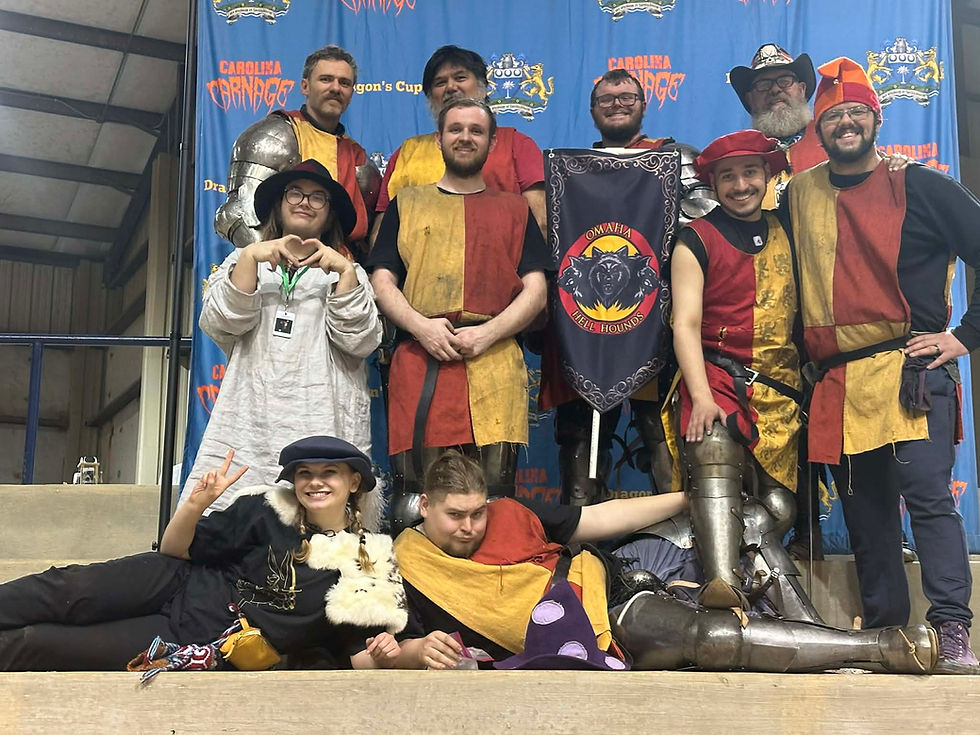
One moment, though, stood out above the rest. During a Sunday fight against Barbarian Ice, he found himself lined up across from what he called the largest man he had ever seen. Instead of charging, the man looked at them and said, “I want to fight!”—then started meowing and pawing at them with his shield.
It nearly broke his composure completely.
They managed to pull it together, took one round, lost the others—but that moment stuck. Not because of the result, but because it captured something about the sport that’s hard to explain unless you’re there.
After Carnage, one thing became clear for Matthew: he wants more of it. More fights, more time with his team, more connections with the people in the sport.
Morgan — Stepping into it
Morgan’s introduction to Buhurt didn’t start with fighting—it started with watching.
In the summer of 2025, her husband began attending practices with Imperium Armored Combat, and she came along on weekends. At first, it made her anxious. She had never been involved in a combat sport, and the intensity of it all was unfamiliar.
What changed that was seeing other women step into the lyst.
Watching them fight—and enjoy it—shifted her perspective. Through connecting with teammates like Ashley Wagner and other femmes in the Carolinas and online, the sport started to feel like something different: a space where she could build confidence and feel empowered.
She began training in August 2025, starting in soft kit, and by October attended an armor event to pick up used gear, hoping to eventually join a melee team. Her first tournament came in November at Bacon’s Castle. It was fun, but also humbling—she still felt very new and didn’t feel like she contributed much. What she did gain was a clear sense of what she wanted to improve.

Going into Carolina Carnage, her expectations were simple: have a good time, fight when possible, and leave with more lessons.
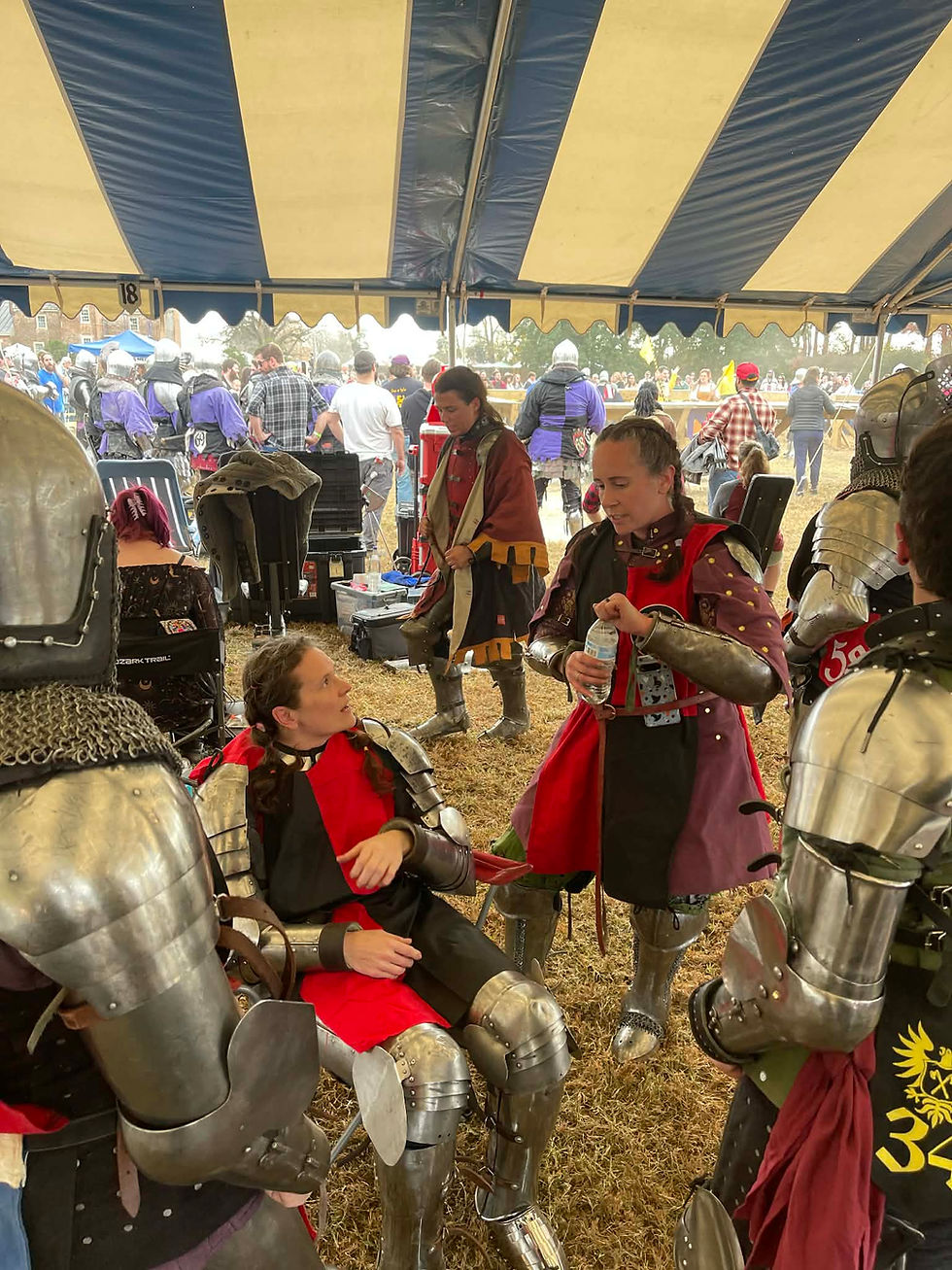
What she found was an event that felt incredibly well put together. From the venue and team layout to the livestream and awards, everything felt professional and intentional. Watching duels on Friday, the energy was electric, but the setup made it easy to follow without feeling overwhelmed.
As the weekend moved into team fights, the organization became even more noticeable. Teams knew where to be and when, and staff and volunteers helped keep everything running smoothly despite the scale of the event.
For Morgan, though, the most impactful part was the people—especially the other women.

Meeting and fighting alongside multiple femme teams was the highlight of her experience. Seeing strong, capable women supporting each other through skill, grit, and dedication was something that stuck with her.
Her most memorable moment came on Sunday, stepping into 12 vs 12 battles alongside fighters from Crimson Tulips, Chaos Cryptids, and Athena’s Wrath. It was something entirely new—bigger, faster, more intense. She was nervous, but also excited.
What stayed with her most was the feeling of being part of something bigger—working together with people she hadn’t fought with before, and accomplishing something as a team.
After Carnage, her goals are clear. She wants to keep improving, step into duels as well as melees, contribute more to her team, and continue supporting other femmes entering the sport.
Alexander — Hooked from the start
Alexander’s entry into Buhurt started with curiosity—and a bit of humor.
As he puts it, once you hit 30, something makes you fixate on a new era of history, and for him, it landed on medieval. He saw an ad for Carolina Carnage on Facebook and went in without really knowing what Buhurt was, expecting something like an entertaining Renaissance fair. Then he saw it.
The chaos, the energy, the impact—it was enough. He didn’t want to just watch; he wanted to be out there.

He spent most of the day figuring out who the local team was, eventually identifying the Palmetto Knights. They didn’t win much—but that didn’t matter. In fact, that was exactly what drew him in. That was the team he wanted.
After talking with a fighter named Ian in the stands, he got connected and started training. Things moved quickly. Within about seven weeks, he found himself stepping into borrowed armor at Cincinnati Siege—only his second time ever fighting in kit.
It was a fast introduction. Facing experienced opponents, taking heavy hits—including one he described as “riding the lightning” after a strike to the thigh—and realizing just how intense the sport really is.
And still, that was enough. He was hooked.
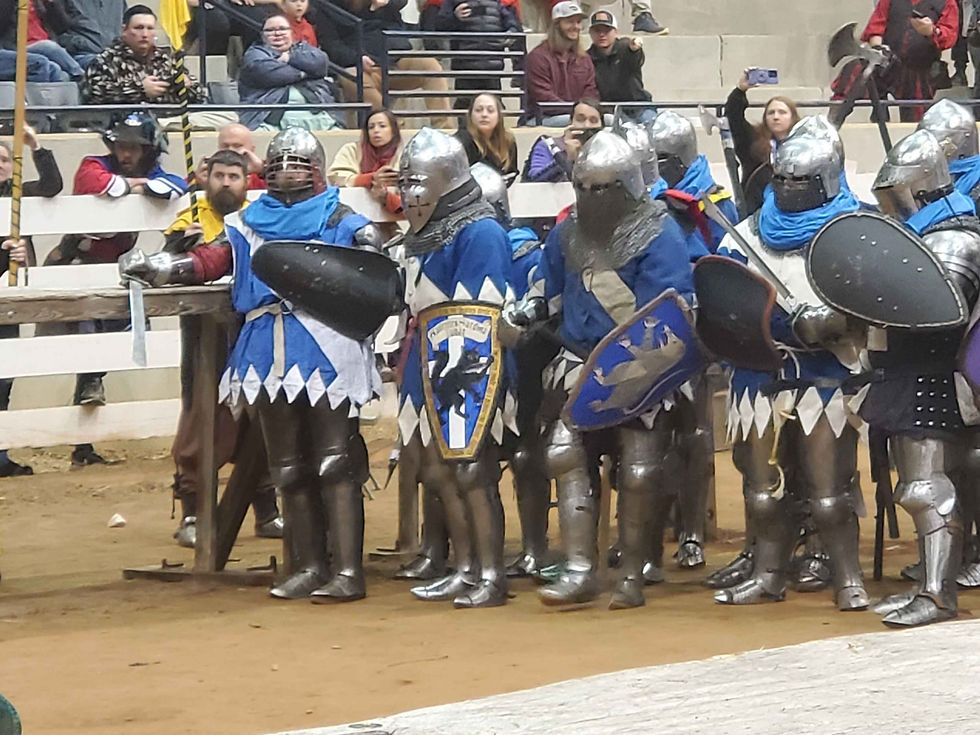
He committed fully—getting his own armor, making the team, and returning to Carolina Carnage in 2026 as a fighter. This time, though, the experience was very different. As part of the Palmetto Knights, who host the event, he saw the work behind the scenes. Between helping where needed and preparing for fights, the weekend moved fast—too fast to really step back and take it all in.
That was one of the biggest surprises. Months of preparation, and then suddenly it’s over.
And when it ends, it ends hard. The adrenaline, the camaraderie, the shared focus—all gone, replaced by everyday life. It’s a part of the experience no one really warns you about.

What stayed, though, was the connection.
The way people form bonds quickly in this sport. The way strangers become teammates, and opponents become friends. He admits he used to think phrases like “buhurt is love” sounded a little off—but after experiencing it, he understands it now.
That sense of community extended to his own team as well. The Palmetto Knights welcomed both him and his wife fully, bringing them into the team and giving them purpose and support. That kind of culture is something he sees as essential to preserve.
It also changed how he views the sport. Seeing the effort behind the event showed him that Buhurt isn’t just about fighting—it’s about creating an experience for everyone involved. If the sport is going to grow, that balance matters.

Three different paths. Three different starting points.
But all leading to the same place.
To Matthew, Morgan, and Alexander—thank you for sharing your stories and letting others see Carolina Carnage through your eyes. It’s these perspectives that show what the sport really is, beyond the armor and the hits.
And to anyone watching from the outside, wondering if this is something for you—
It might be.
You don’t need experience. You don’t need to have it all figured out. You just need to show up.
Because somewhere along the way, between the chaos and the camaraderie, you might find more than just a sport. You might find your people.


